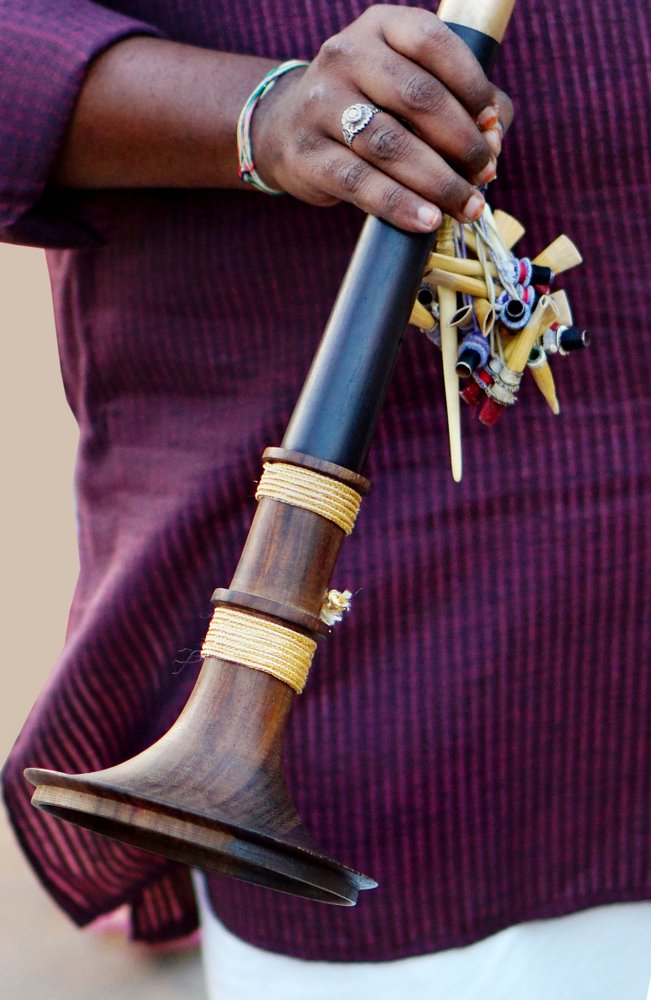
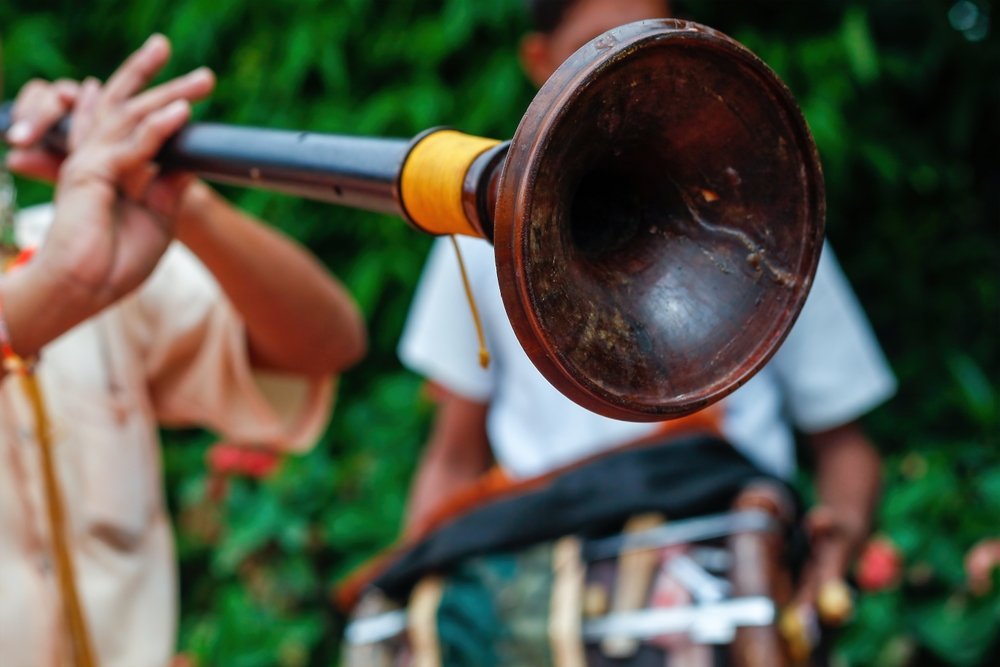
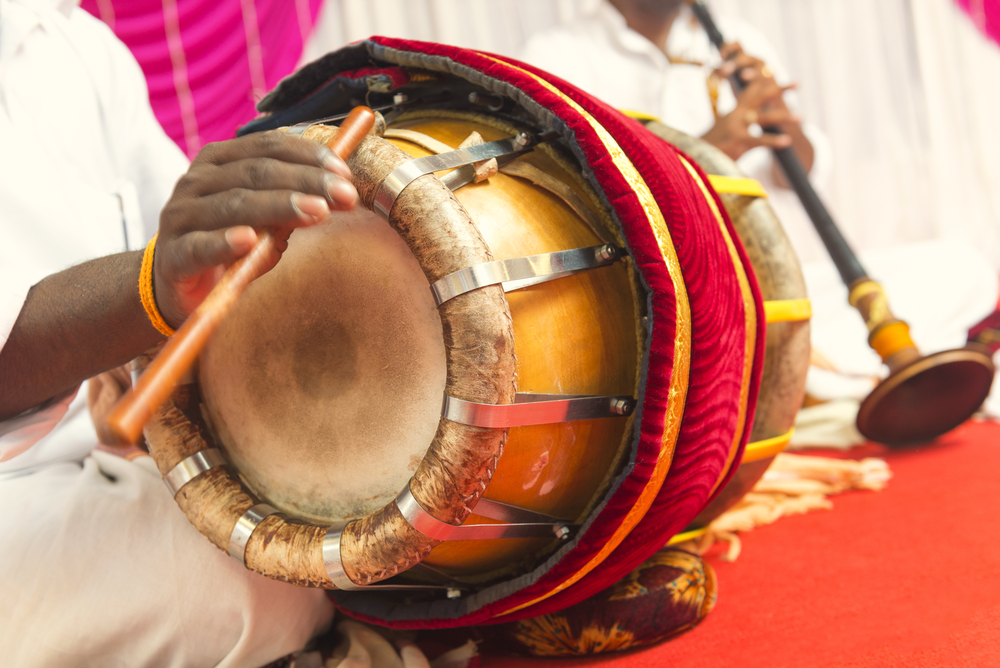
At Raintree Wedding & Events Hall, we honor and celebrate the cultural richness that music brings to life’s most cherished moments. Among the most sacred and powerful elements of South Indian weddings is the Nadaswaram—a traditional wind instrument whose deep, resonant sound adds divine energy to any ceremony. Known as the “Mangala Vadyam” (auspicious instrument), the Nadaswaram is not just music—it is a spiritual invocation.
A Timeless Cultural Symbol
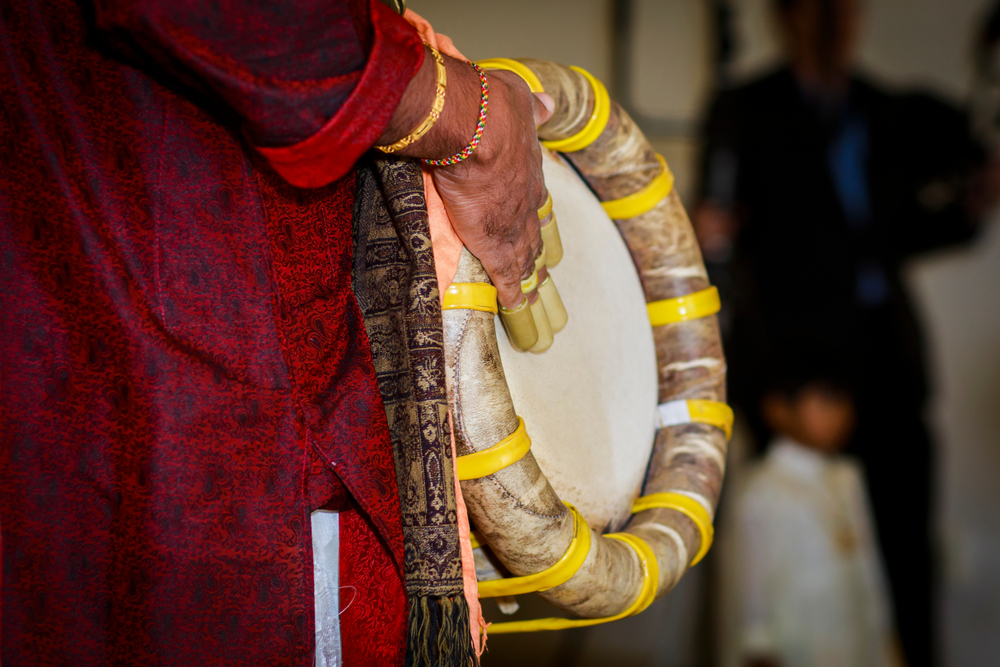
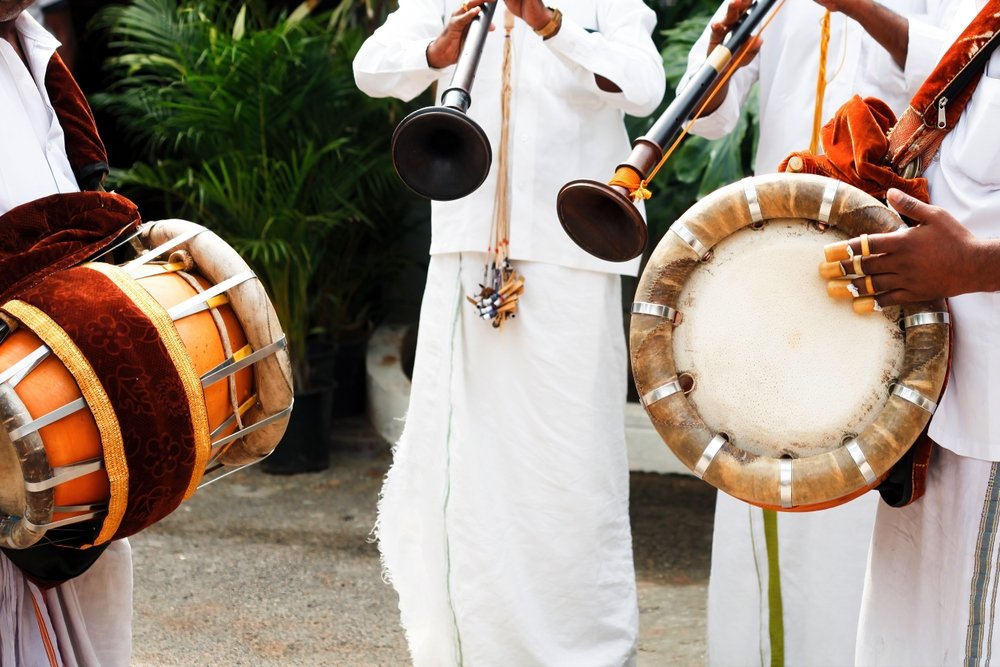
The Nadaswaram, often played alongside the Thavil (a barrel-shaped drum), is an ancient classical instrument revered in temple rituals, wedding ceremonies, and festive processions across Tamil Nadu, Andhra Pradesh, Karnataka, and Kerala. Its roots date back over 2,000 years and it is considered one of the world’s loudest non-brass acoustic instruments.
Crafted from the wood of the aacha (hardwood) tree and fitted with a double reed, the Nadaswaram produces a rich and majestic tone that’s both meditative and celebratory. The music begins at the threshold of the wedding hall, welcoming guests and invoking divine blessings for the couple and their families.
Enhancing the Wedding Experience
In South Indian weddings—especially Tamil Brahmin and Chettiar traditions—the Nadaswaram is much more than ceremonial. It is central to the sequence and rhythm of the rituals. As the bride walks into the mandap, the soulful strains of the Nadaswaram announce her arrival. During the tying of the Mangalsutra or thaali, the Nadaswaram reaches a crescendo, intensifying the emotion and marking the sacredness of the moment.
From the Ganapathi Homam to the Kashi Yatra, Maalai Matral to Saptapadi, every step is accentuated by melodic ragas played live by trained Nadaswaram artists. The sound doesn’t just fill the air—it lifts the spirits, connects generations, and bridges the physical and spiritual dimensions of the wedding.